Shares of Tesla traded unevenly on Friday, briefly rising as much as 1.3% before giving up gains to hover near flat, as investors continued to assess the company’s latest earnings and long-term strategy.
The muted performance came despite broader market strength.
The S&P 500 rose 0.2%, while the Nasdaq Composite gained 0.6%. The Dow Jones Industrial Average fell 182 points, or 0.4%.
Weekly decline extends pressure
Tesla shares are on track to end the week down around 6%, following a sharp 3.6% drop on Thursday after the company reported its first-quarter results.
Although Tesla delivered better-than-expected earnings, the market reaction was negative as the company raised its capital expenditure guidance to $25 billion from $20 billion.
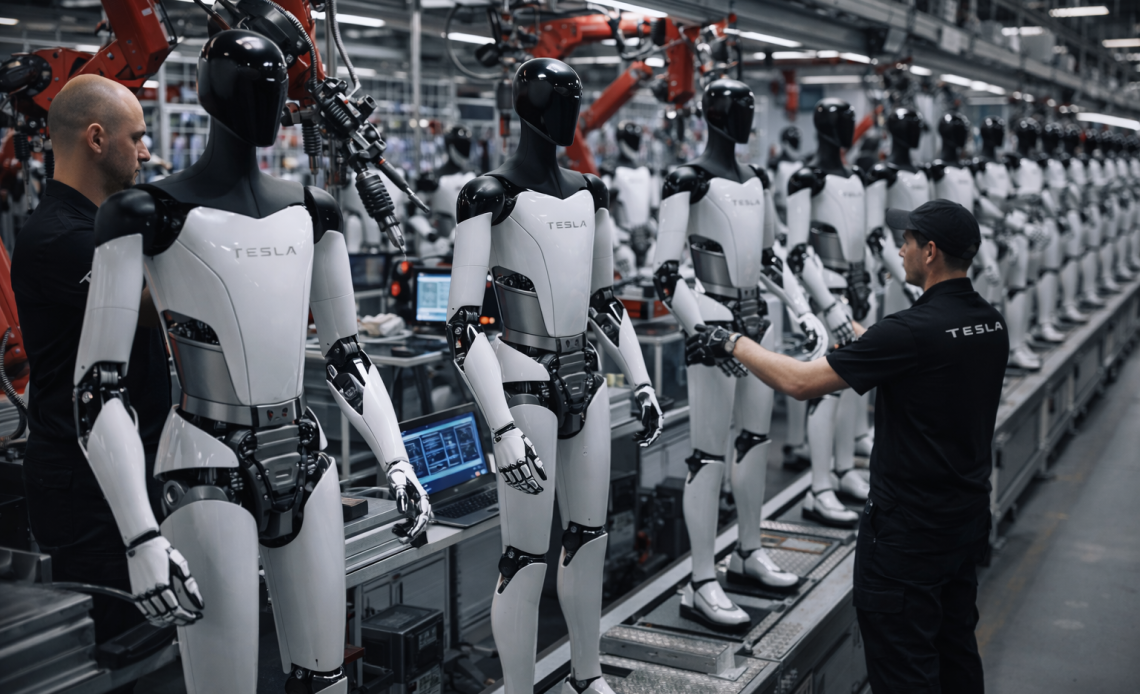
The increased spending reflects Tesla’s push to expand its artificial intelligence initiatives, including robo-taxis and humanoid robots, but these segments have yet to generate meaningful revenue.
The latest decline follows a brief recovery last week, when Tesla snapped an eight-week losing streak.
Even so, the stock has fallen in 11 of the past 13 weeks and is down about 16% over that period.
AI progress remains central concern
Investor sentiment has increasingly centred on Tesla’s ability to deliver on its artificial intelligence ambitions.
While the company is investing heavily in AI-driven initiatives, including autonomous driving and robotics, progress has been slower than some investors had anticipated.
This has raised concerns about the timeline for monetising these technologies.
At the same time, Tesla’s core electric vehicle business continues to face headwinds.
US EV sales declined 27% year-on-year in the first quarter following the expiration of the federal $7,500 tax credit, adding pressure to demand.
Cybercab production begins
On Friday, Chief Executive Officer Elon Musk said the company has begun manufacturing its Cybercab robotaxi, marking a step forward in its autonomous mobility strategy.
The two-seat vehicle, unveiled without a steering wheel or pedals, is intended to form part of Tesla’s robotaxi network, which will include both fully autonomous vehicles and those with human safety monitors.
Tesla plans to expand its ride-hailing service to additional US cities, including Phoenix, Miami, Orlando, Tampa, and Las Vegas, in the first half of the year.
The company launched the service in Austin and has since expanded to San Francisco, Dallas and Houston.
Analyst views reflect caution
RBC Capital lowered its price target on Tesla to $475 from $480 while maintaining an Outperform rating.
The firm cited approximately $5 billion in additional capital expenditure and ongoing uncertainty around Tesla’s humanoid robot program as key factors behind the adjustment.
It noted that first-quarter gross margins remained relatively strong, even after excluding one-time benefits.
Tesla’s recent trading underscores a broader tension between its near-term financial performance and long-term growth narrative.
While earnings have shown resilience, investors appear increasingly focused on whether the company can translate its significant AI investments into tangible revenue streams.
The post Tesla stock jittery after earnings: why investors remain cautious appeared first on Invezz